

Romanesque Road in the Altmark
Altmark day trips
Romanesque Road: the north route through the Altmark
In short: The Romanesque Road (Straße der Romanik) is a tourist route to more than 80 Romanesque buildings in Saxony-Anhalt. Since 1993 it has run like a figure of eight for more than 1,000 kilometres through the state, with Magdeburg at the crossing point. Its north route passes through the Altmark – and one of its stops, the village church of Engersen, belongs to Kalbe (Milde). Wiepke, Rohrberg, Diesdorf, Salzwedel and Arendsee are close by.
As of: November 2026
What is the Romanesque Road?
The Romanesque Road opened on 7 May 1993 and links cathedrals, abbeys, castles and village churches from the 10th to the 13th century. It forms a figure of eight through Saxony-Anhalt: the south route leads to Halberstadt, Quedlinburg and Naumburg, among others, and the north route through the Börde and the Altmark to Salzwedel, Havelberg and Jerichow. Both meet in Magdeburg. The route is part of the European Transromanica network.
Which stops are in the Altmark near Kalbe (Milde)?
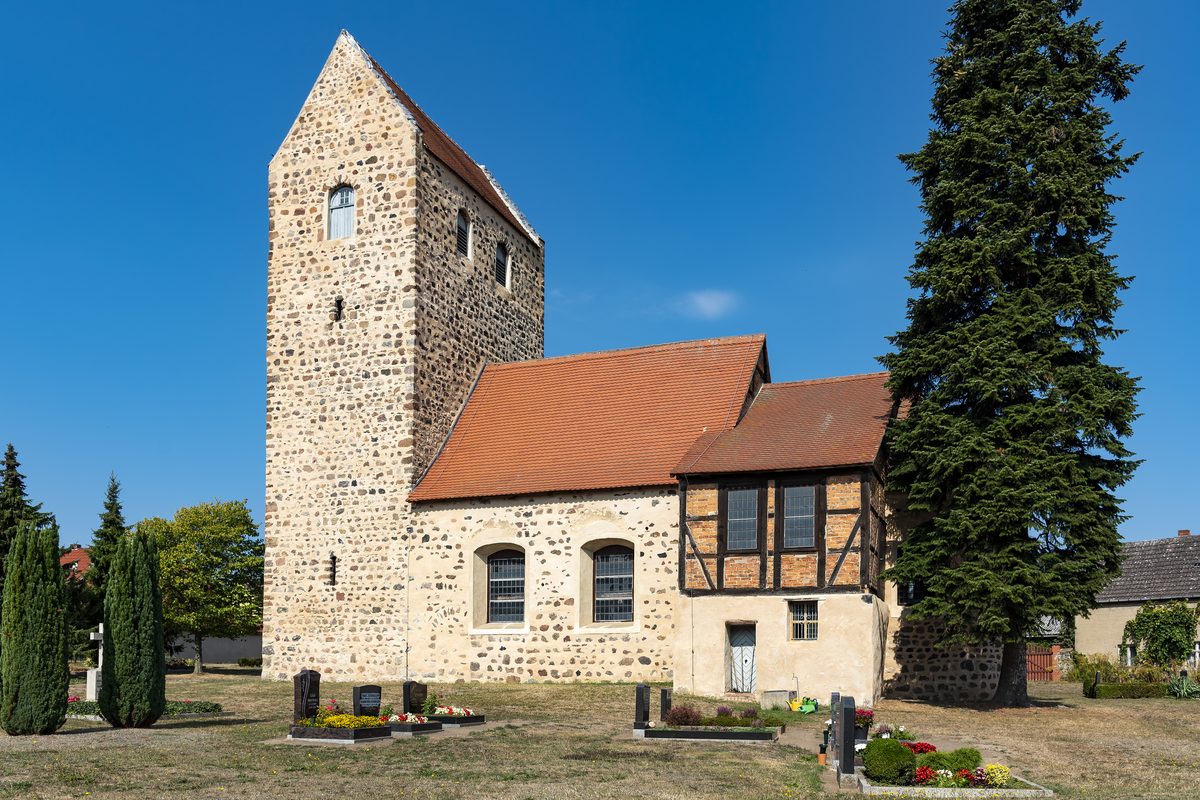
- Engersen village church (Kalbe/Milde): Engersen is part of Kalbe (Milde). The fieldstone church was probably built around 1210 to 1220, with walled-up Romanesque windows and a round-arched porch. Inside are a pulpit altar, a horseshoe gallery and a glazed patron’s box. The 13th-century triumphal cross is now in the Altmark Museum in Stendal. Visits by arrangement; tours via the Kalbe (Milde) tourist information, tel. +49 39080 97122. About 10 minutes by car from us.
- Wiepke village church (Gardelegen): a late Romanesque fieldstone church from the mid-12th century on the northern edge of the Hellberge hills, just a few kilometres from Engersen. Look out for the painted coffered choir ceiling of 1602 and the patron’s box of 1693. Opening by arrangement, contact details on the notice board in front of the church.
- Rohrberg village church: a fieldstone church from the second half of the 12th century with a Romanesque font and a bronze bell from 1337, whose caster left the inscription “ego sum hermannus”. According to the Romanesque Road it is open daily from Easter to October, 9 am to 6 pm.
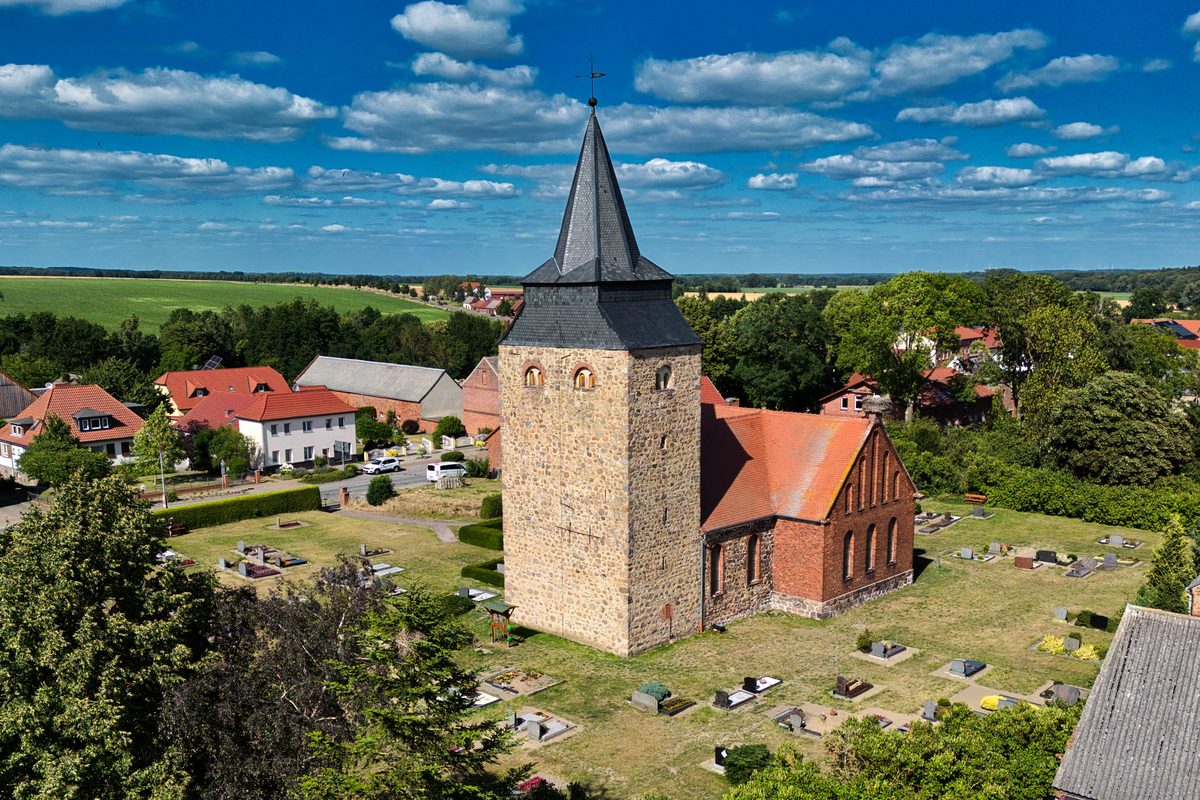
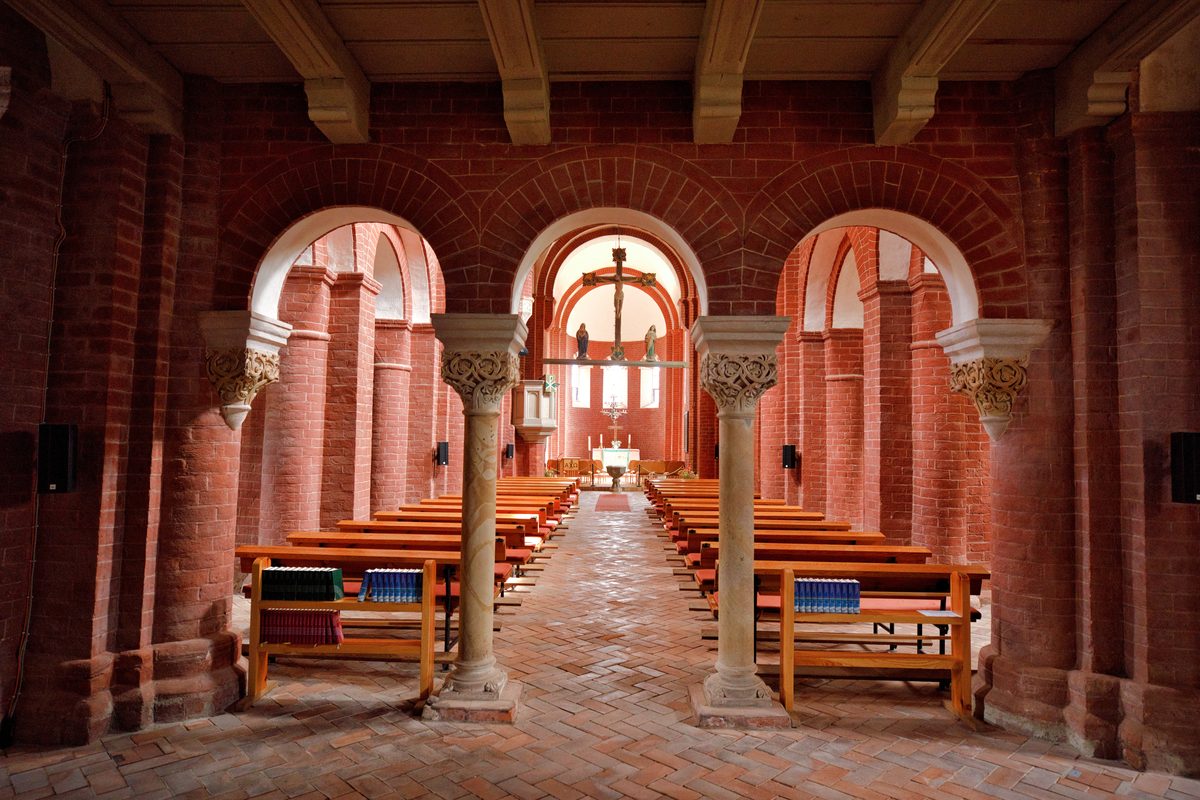
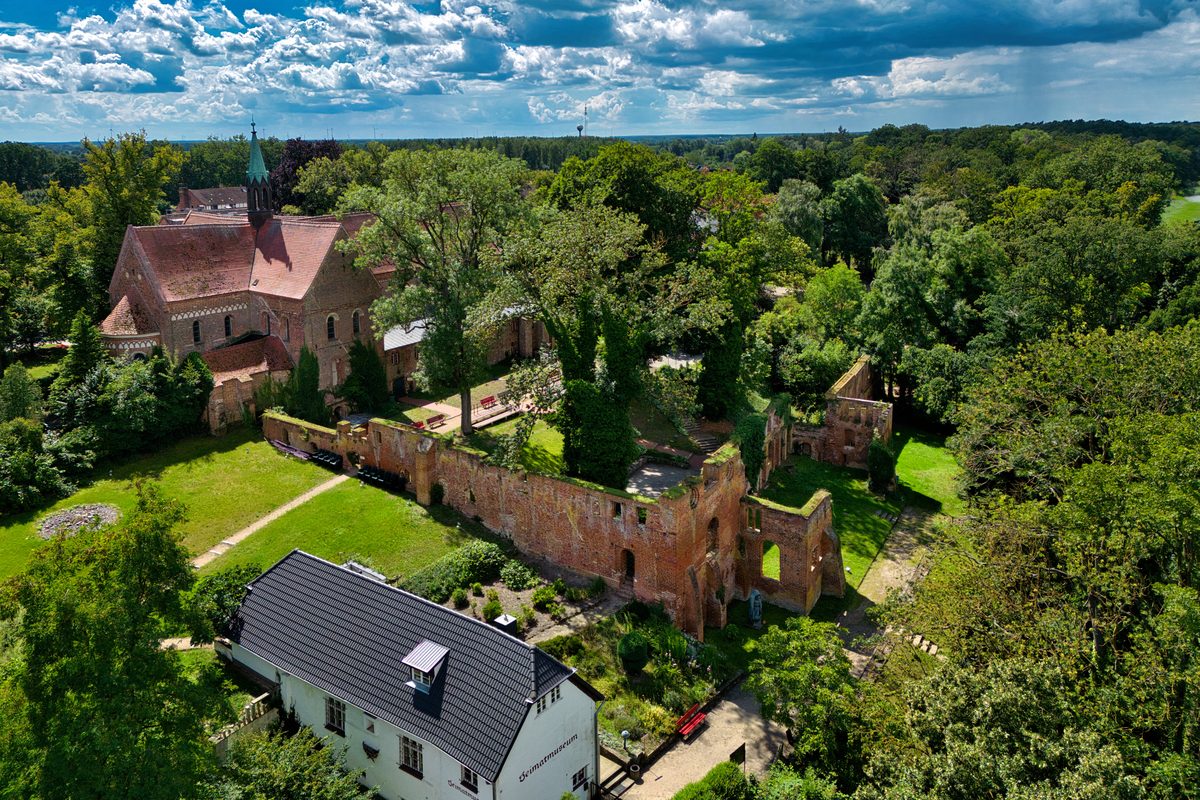
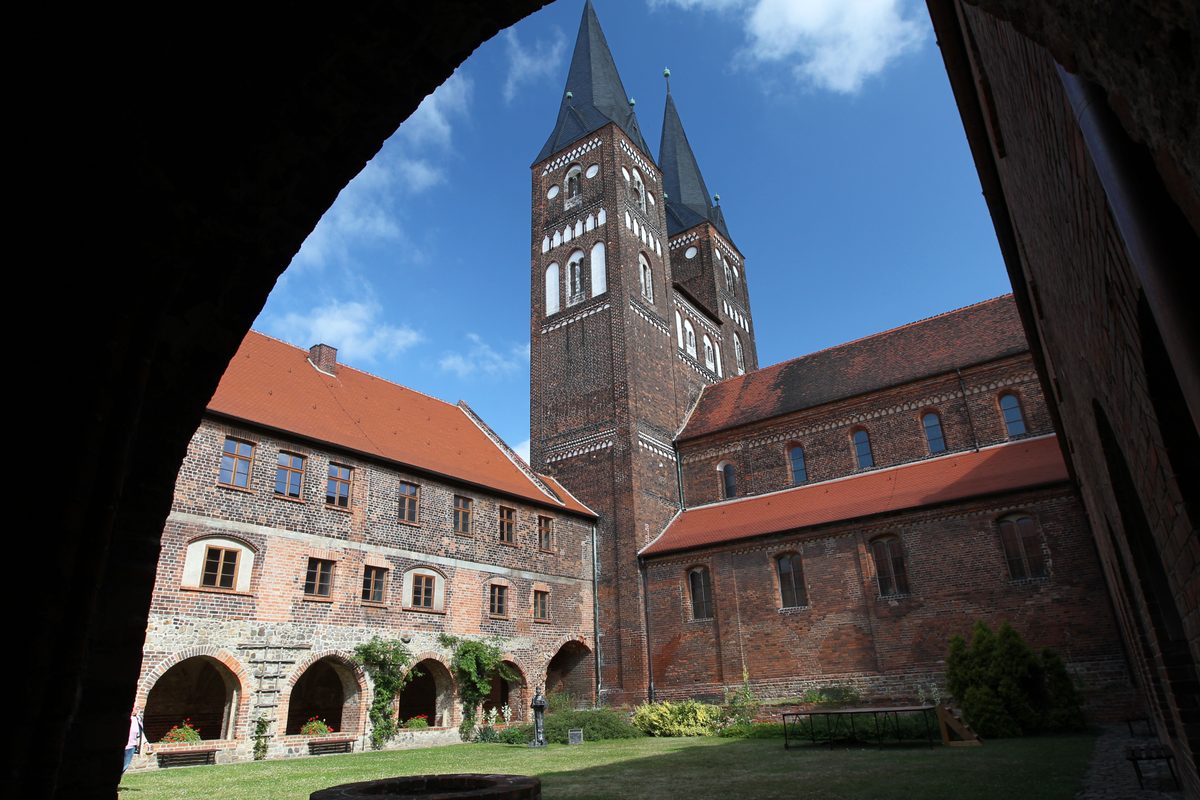
- Diesdorf abbey church: the abbey church of St Mary and the Holy Cross is, together with the church in Arendsee, one of the best-preserved late Romanesque buildings in the Altmark – brick architecture with carefully added decoration. The Diesdorf open-air museum is in the same village.
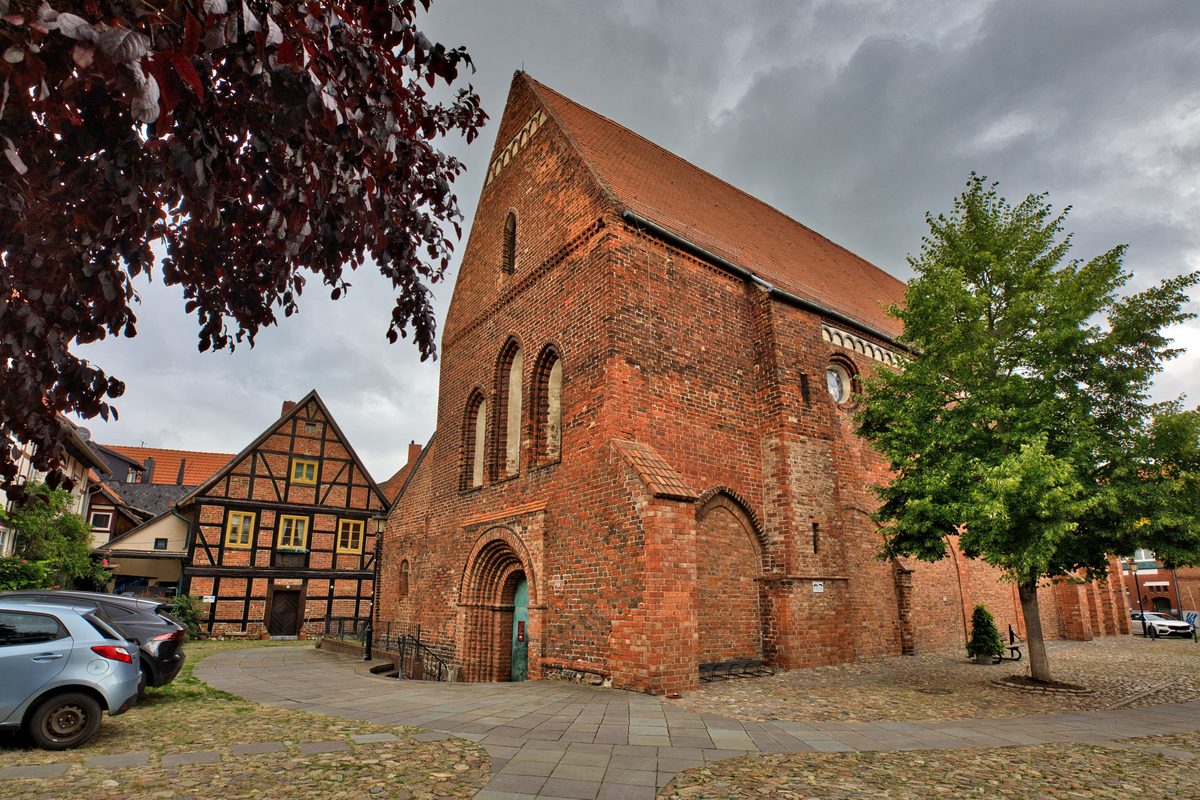
- St Lawrence in Salzwedel: a Romanesque brick basilica from the 13th century in the old town. For a time it served as a salt store; since 1860 it has been a Catholic parish church. More about the Hanseatic town of Salzwedel.
- Arendsee abbey: a Benedictine convent on the north shore of the lake with a Romanesque brick church and abbey ruins. More on our page about Lake Arendsee.
What is typical of Romanesque architecture in the Altmark?
Typical Romanesque features are round arches, thick walls and small, high windows. There was hardly any natural stone in the Altmark. In the villages people therefore built with fieldstones from the fields – as in Engersen, Wiepke and Rohrberg. For larger churches and abbeys, brick took over from the 12th century, for example in Diesdorf, Arendsee, Salzwedel and Jerichow abbey. This brick Romanesque still shapes the north of Saxony-Anhalt today. For more churches, see our article on churches and monasteries in the Altmark.
Tours along the Romanesque Road from Kalbe (Milde)
- Short by bike: from Kalbe to Engersen and on to Wiepke – two Romanesque fieldstone churches on a short ride through the Altmark.
- West: Rohrberg, Diesdorf and Salzwedel: by car via Rohrberg to Diesdorf abbey church, in the afternoon to Salzwedel with St Lawrence; Salzwedel and Arendsee are each about 30 minutes from Kalbe.
- East: Elbe and Havel: St Peter’s in Seehausen and St Nicholas in Beuster, Havelberg Cathedral, the village church in Schönhausen and Jerichow abbey.
Hotel on the Romanesque Road? Stay in Kalbe (Milde)
If you are looking for a quiet place to stay on the Romanesque Road, the country hotel “Zum Pottkuchen” in Kalbe (Milde) offers eight rooms in a listed merchant’s house from 1775 – only about 10 minutes by car from Engersen village church away. From here you can also easily reach Salzwedel, Gardelegen, Stendal and Tangermünde. Find out more about our hotel in the Altmark and further destinations in our Altmark day trips.
Frequently asked questions about the Romanesque Road in the Altmark
What is the Romanesque Road?
A tourist route in Saxony-Anhalt to more than 80 Romanesque buildings such as cathedrals, abbeys, castles and village churches. It opened in 1993.
Where does the Romanesque Road start?
The route forms a figure of eight with Magdeburg at the crossing point. From there the north route leads through the Börde and the Altmark, the south route into the Harz and the Saale-Unstrut region.
How long is the Romanesque Road?
The north and south routes together are more than 1,000 kilometres long.
Which places in the Altmark are on the Romanesque Road?
Among others Engersen, Wiepke, Rohrberg, Diesdorf, Salzwedel, Arendsee, Beuster, Seehausen, Havelberg and Schönhausen. Jerichow abbey lies just beyond the Altmark.
What is typical of Romanesque architecture?
Round arches, thick walls and small windows. In the Altmark, village churches were mostly built of fieldstone, larger churches and abbeys of brick.
Can you visit Engersen village church?
Yes, by arrangement. Tours are arranged by the Kalbe (Milde) tourist information on +49 39080 97122.
How far is the Romanesque Road from Kalbe (Milde)?
The Engersen stop belongs to Kalbe (Milde) and is about 10 minutes by car from the country hotel “Zum Pottkuchen”.
Where to stay on a trip along the Romanesque Road?
If you want to combine the Romanesque Road with other destinations in the Altmark, our country hotel “Zum Pottkuchen” in Kalbe (Milde) is a central base – only about 10 minutes by car from Engersen village church away. Enquire about a room now.
Header image: The Romanesque fieldstone church in Wiepke from the air. Photo: © IMG Sachsen-Anhalt mbH/Christian von Polentz
 The country hotel “Zum Pottkuchen” is a small, owner-run hotel in the old town of Kalbe (Milde) – a quiet base for the north route of the Romanesque Road and the whole Altmark. Eight rooms, breakfast in-house and free 1 Gbit/s fibre internet. View our rooms or enquire directly.

